Use a shared model for the target allocation and account settings for an individual client’s implementation needs. This guide continues with synthetic client Taylor Morgan and Aggressive Portfolio.

1. Read the current account

Ask Tilt Agent: “Show Taylor Morgan’s account, its portfolio assignment, effective sleeve weights, and account-specific settings.” Check the organization, client, and account in the response. A portfolio name alone does not establish which account a setting affects. If the portfolio is missing, ask: “Propose assigning Aggressive Portfolio to this account. Show its effective allocation before saving.” Confirm the exact assignment, then ask Tilt Agent to read back the saved portfolio and weights. Build a model portfolio explains the shared structure.
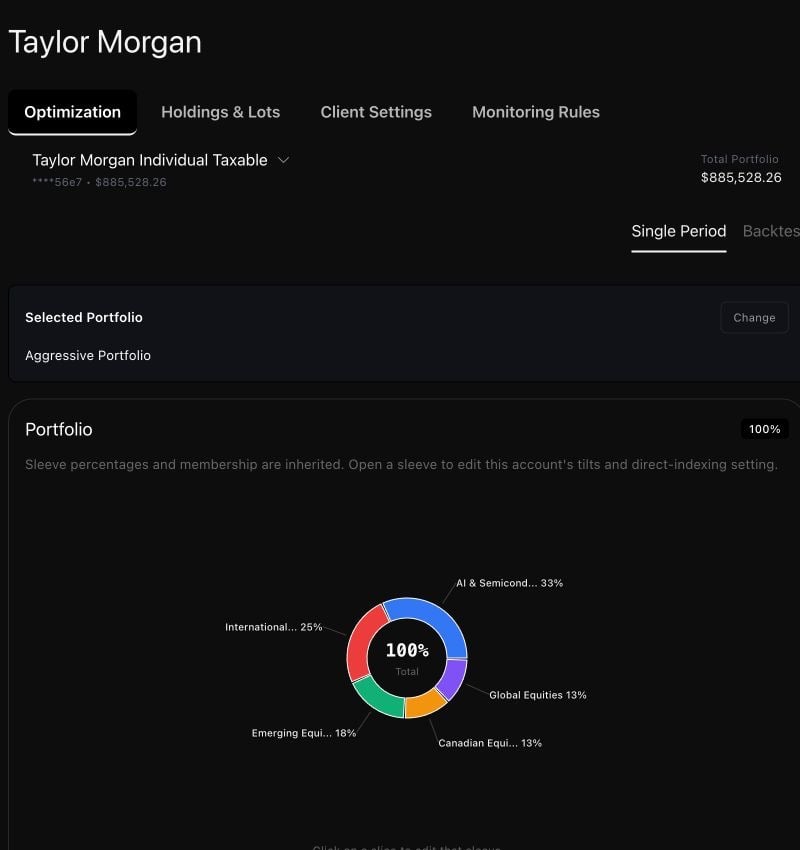
Taylor Morgan's Optimization tab shows the assigned Aggressive Portfolio, inherited allocation chart, and account-specific implementation choices.

Taylor's account inherits five sleeve weights from Aggressive Portfolio. Its U.S. sleeve also has account-level direct indexing and a Tilt adjustment.

2. Propose one account change

Ask for a concrete setting, such as “Propose a 5% USD cash buffer for Taylor Morgan’s account. Show the current value, the value that would take effect, and its source. Do not save yet.” Review the full proposal. The account can have restrictions, cash settings, tax preferences, direct-indexing choices, and Tilt adjustments. A change may replace a complete collection, so check which existing choices the proposal preserves. Confirm the specific account change only after the proposed and effective values match your intent.

3. Verify the result

Ask: “Read Taylor Morgan’s saved account settings and explain which value now takes effect.” A successful write response is followed by a read of persisted state. If Tilt Agent reports a conflict or uncertain save, inspect the account again before proposing the remaining change. Account tailoring changes optimization inputs. It does not itself run an optimization or place trades. Understand settings and rules explains inherited values and Dynamic Rules; Review a rebalance covers the later proposal.